Impartiality or control? Who decides what free speech looks like in UK media
The BBC insists impartiality is the foundation of public broadcasting. However, critics increasingly argue that impartiality has become a softer word for caution, particularly when speech threatens political or institutional comfort.
That tension exploded publicly during the BAFTAs controversy. During the live broadcast, chants of “Free Palestine” were reportedly removed from BBC coverage, while John Davidson’s Tourette’s tic - which included racist language - remained audible. Put aside the quite frankly insane reaction from black Americans, which I believe and hope to be representative of the reactionary Trumpian society Americans are subject to.
For many younger viewers online, the contradiction looked impossible to ignore. Political speech was edited out while offensive language stayed in meaning this was a choice. https://www.youtube.com/watch?v=hGBYWA4whHQ
The BBC never framed the decision as censorship. But to audiences already suspicious of mainstream media, it reinforced a growing belief that some forms of speech are treated as more dangerous than others. And how that is determined can only be assessed from the outside by looking at who tends to be the most effected. Well, I’m yet to see, and highly doubt we ever would see someone’s speech cut for a pro-isreal stance.
The question raised by the BAFTAs controversy is not simply whether the BBC made the correct editorial decision, but whether political speech in Britain is increasingly moderated according to institutional comfort rather than a clear and consistent principle.
That question sits at the centre of a much larger crisis facing British media: who decides what speech is acceptable, and whose interests those decisions ultimately protect.
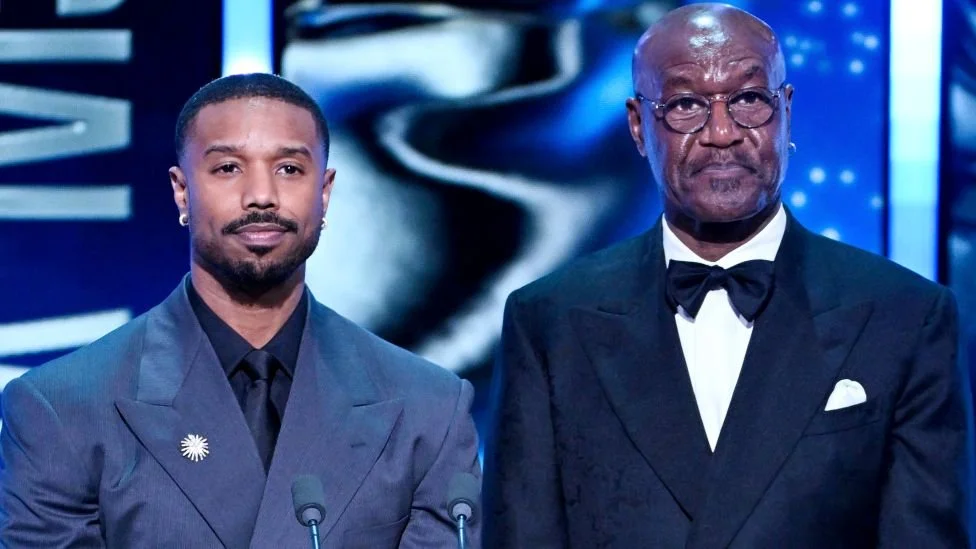
Michael B. Jordan and Delroy Lindo presenting at 2026 BAFTAs
Claire Enders CBE, founder of Enders Analysis and one of Britain’s most influential media analysts, argued that most editorial decisions inside the BBC are not ideological conspiracies but complex institutional calculations.
“At the heart of it all is this mysterious element called impartiality,” she told me. “It’s very hard to understand, except it’s enshrined in the charter.”
That word “impartiality” appears constantly throughout the BBC’s editorial structure. I probably heard it 5 times a day while interning as a sportswriter for BBC Scotland. Under Ofcom’s Broadcasting Code, broadcasters are legally required to preserve “due impartiality” on politically controversial issues. Importantly, Ofcom makes clear that “due impartiality” does not mean giving every opinion equal airtime. Instead, coverage must be “adequate or appropriate” depending on context. That wording matters because it leaves significant room for editorial interpretation.
Enders argued that the BAFTAs situation reflected exactly that kind of judgement call.
“They decided that someone with Tourette’s syndrome should not be deprived of his voice,” she said. “Whereas ‘Free Palestine’ is a political stance that many people take.”
But with young people, who are so aware of political and foreign conflict because of the nature of social media, it's extremely hard to convince them that free Palestine is any more political than saying don't shoot as someone points a gun at an innocent bystander. And rightfully so. It’s about human rights not complex politics.
She also argued the phrase had become politically explosive in Britain following rising tensions around anti-Semitism allegations.
“It’s become a lightning rod for anti-Semitic events,” she said. “So these things should be kept a lid on.”
That quote reveals something important about modern broadcasting. The chant was not removed because it was illegal. It was removed because executives believed it carried political consequences. That distinction is central to the entire debate.
Former BBC journalist Barnie Choudry, who worked for the broadcaster for 24 years, pushed back strongly against the idea that broadcasters are directly controlled by governments or intelligence services.
“I don’t think it’s conspiracy,” he told me. “I genuinely think it was cock up.”
Choudry argued many controversial decisions are the result of poor staffing, collapsing newsroom structures and institutional panic rather than deliberate political agendas.
“The BBC are not employing the right people,” he said. “They are letting people with experience go, and they’re not training them properly.”
But Choudry feels the BBC now operates in an impossible environment.
“We’ve got to make sure that we’re fair, balanced, accurate and impartial,” he explained. “What we mustn’t show is our political leaning.”
But that idea of “not showing a political leaning” is getting harder and harder to actually sustain in practice. Because neutrality doesn’t really sit outside of politics anymore. Every editorial decision, what gets cut, what stays in, what gets framed as acceptable or not, is already political in how it ends up being received.
Cut a chant and people call it censorship. Leave it in and people accuse the broadcaster of activism. But there’s a third reading that often gets missed: even silence can be political, especially when it’s applied inconsistently. From that angle, the BBC isn’t just being misunderstood or navigating precarious waters, it’s operating in a space where neutrality is no longer seen as the absence of politics, but as a position within it. And once you accept that, “pure impartiality” stops looking like a fixed standard and starts looking more like a constant argument over who gets to be heard, and who doesn’t.
The collapse in trust among younger audiences did not happen overnight.
Research from Ofcom and the government’s BBC Mid-Term Review found that impartiality is consistently one of the lowest-rated aspects of BBC news coverage.
One Ofcom-linked survey found BBC News ranked below Channel 5 and Sky News for perceived impartiality among audiences. That decline has coincided with the explosion of TikTok, YouTube commentary channels and politically driven online media like Novara Media, Owen Jones and Hasan Piker, where opinion is presented openly rather than hidden behind institutional language.
Choudry believes broadcasters fundamentally failed to adapt to that shift.
“Nobody watches appointment-to-watch television anymore,” he said. “Young kids are getting their news from social media from people they trust because they think they’re more reliable than the BBC.”
He argued mainstream broadcasters still communicate like it is 2005 while younger audiences consume politics entirely differently.
“You’ve only got three seconds to persuade them to watch and listen to you,” he said.
That matters because social media has completely changed how people interpret institutional authority and how they consume news. Younger audiences no longer assume the BBC is automatically trustworthy simply because it is the BBC.
Instead, they compare clips, reactions and narratives across dozens of platforms instantly. And when editorial decisions appear inconsistent or influenced they create their own explanations.
The BBC and Ofcom consistently defend impartiality rules as protections against political bias. But critics increasingly argue those same rules can become tools for suppressing controversial speech.
Ofcom states that broadcasters must avoid giving “undue prominence” to political opinions and maintain “due impartiality” on controversial public issues.
In theory, those rules sound reasonable.
In practice, they create difficult questions: Is “Free Palestine” a humanitarian slogan or a political statement? Is refusing to air it impartiality or suppression? Why are some forms of nationalism framed as democratic debate while others are framed as risks to public order? Who actually decides where that line sits?
These are not abstract questions anymore.
Since October 2023, journalists, football pundits, musicians and actors across the UK have faced backlash, suspensions or investigations over pro-Palestinian speech.
Gary Lineker was temporarily removed from Match of the Day after criticising government asylum rhetoric online. Ofcom later suggested freedom of expression also had to be weighed alongside impartiality rules.
GB News, meanwhile, has repeatedly faced accusations of breaching impartiality regulations while simultaneously being defended by politicians as offering “balance”.
That inconsistency is exactly what fuels public suspicion. Because if impartiality rules are applied differently depending on politics, audiences stop believing they are neutral standards at all.
One of the most revealing moments in my interview with Enders came when discussing how editorial decisions are made internally.
“They will be guided by the government, by the head of Ofcom,” she admitted.
Not controlled. Guided.
Think about it, that distinction matters.
Modern political influence rarely works through direct censorship. It works through pressure, anticipation and institutional fear. Broadcasters know which stories generate ministerial outrage, newspaper attacks and accusations of extremism.
Over time, caution becomes embedded into editorial culture itself. The result is a form of self-regulation shaped by political atmosphere. And nowhere is that more obvious than around Palestine.
Even outside the BBC, major institutions increasingly treat pro-Palestinian speech as uniquely volatile territory. Universities have restricted protests. Employers have investigated staff social media posts and protest laws have expanded dramatically under recent governments. I mean Leona Kamio, 30, Samuel Corner, 23, Fatema Rajwani, 21, and Charlotte Head, 29, are all still imprisoned here for being part of a Palestine Acton – a protest group fighting for human rights in Palestine. Or you know, a “terrorist” group.
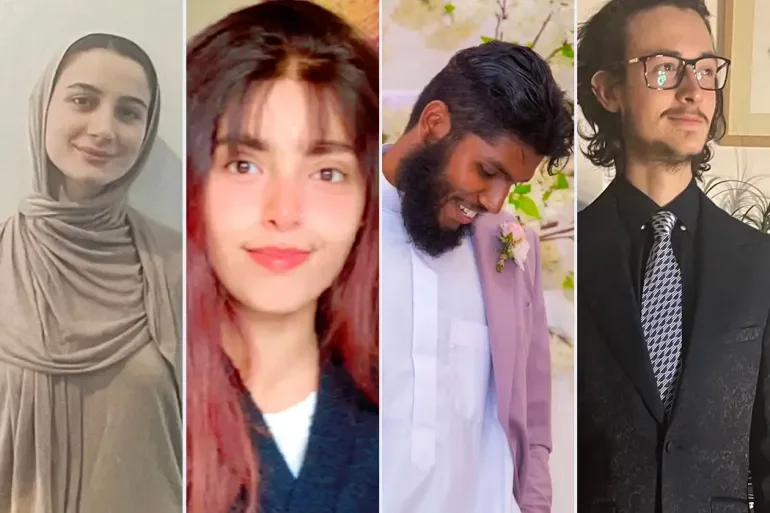
Palestine Action hunger strikers (left to right) Teuta Hoxha, Heba Muraisi, Kamran Ahmed and Lewie Chiaramello
Legally, Britain still protects freedom of expression under Article 10 of the Human Rights Act. But socially and institutionally, some speech clearly carries heavier consequences than other speech. That is the contradiction younger audiences increasingly notice.
The UK is also beginning to mirror America’s culture war approach to speech.
Under Donald Trump, debates around protest speech, media bias and “anti-Americanism” became central political battlegrounds. Universities saw police crackdowns on demonstrations, journalists were labelled enemies and protest movements became framed as national security concerns.
Britain is not America.
But the rhetoric is becoming dangerously familiar.
Protests are increasingly discussed through the language of extremism, disruption and public order rather than democratic participation. The Public Order Act expanded police powers around demonstrations and media discussions around Palestine often focus more heavily on protest risk than the humanitarian crisis itself.
None of this means Britain has abolished free speech but it does mean speech is increasingly managed according to perceived institutional risk.
What became obvious after speaking to both Enders and Choudry is that neither believes the BBC operates as a centrally coordinated propaganda machine. Both instead described an institution under enormous pressure: political pressure, legal pressure, social pressure and financial pressure.
But audiences increasingly do not care about those internal complexities. When broadcasters appear inconsistent, people assume motive. When political speech gets edited, people assume agenda. When institutions explain themselves using vague language like “editorial standards”, younger audiences hear bureaucracy protecting itself.
And perhaps that is the real crisis facing British media. Not censorship itself. But the collapse of public belief that powerful institutions apply their rules equally.
How the Social Media Economy Shapes Young People’s Politics
Social media polarisation is not accidental. It is economically incentivised. And although it feels almost insulting to previous generations, who were subject to their own forms of media distortion and historical revisionism, the scale of what exists now is different. The commodification of political identity - and the sheer volume and accessibility of polarising content - is a danger we are only beginning to understand the ramifications of. What outcome other than division can realistically be expected when platforms profit from emotional intensity? TikTok does not really care whether you leave the app politically informed or psychologically exhausted, provided you remain scrolling long enough to serve another advert.
Politics online increasingly feels less like democratic participation and more like performance art. You are rewarded not for accuracy, nuance or truthfulness, but engagement. A 2021 internal Facebook study leaked to the Wall Street Journal found that posts provoking anger consistently performed better because they generated more interaction. Outrage has effectively become the reserve currency of the modern internet.
And while every generation likes to believe the next has been uniquely corrupted by media, there is something genuinely different about an ecosystem in which billions of people consume algorithmically personalised political content every single day. TikTok alone has more than 1.5 billion users worldwide, while YouTube users collectively watch over a billion hours of content daily. None of this material is filtered by public interest first. It is filtered by systems designed to keep people watching for as long as possible.
According to Ofcom, adults in the UK now spend an average of four and a half hours online daily, with younger adults spending significantly longer. Increasingly, social media is not simply where young people socialise; it is where they learn, argue, form political identities and understand the world around them.
That would realistically be less concerning if these platforms functioned like public forums. They do not. They are advertising businesses.
“Social media is essentially a commercial environment,” explains Dr Debbie Ball, Data and Society Lecturer and PhD doctoral researcher at the University of Westminster. “No matter how much the platforms encourage us to believe they’re connecting the world or creating community, it’s still basically fair game for anyone with a lot of ad spend to promote their content up the algorithm.”
This is the contradiction at the centre of modern online political discourse. Platforms market themselves, and are often perceived, as tools for expression while really they are closer to behavioural extraction systems. Every click, pause, rage-comment and doomscroll becomes commercially valuable data used to retain people’s attention.
And attention, unfortunately for civilisation, is most easily captured through emotional stimulation rather than measured analysis of material conditions.
A detailed explanation of housing inequality may reach a few thousand people. Meanwhile, a man in a Nike dry-fit set and sunglasses shouting about “the collapse of masculinity” from inside a leased BMW can reach millions. Before being banned from several platforms, Andrew Tate content amassed billions of views across TikTok through reposted clips built almost entirely around outrage and provocation. However, it is important to make clear that although people’s underlying biases deserve some culpability, these systems are specifically designed to reaffirm those biases and keep users hooked. People are not necessarily becoming inherently more extreme. Rather, the systems distributing information reward emotionally provocative material above almost everything else.
Carl Miller, author, speaker and researcher at Demos, describes these systems as “attention optimisation algorithms”, arguing they may be “the most important single piece of technology affecting culture” today.
“The problem is that the very basic design decisions the platforms have made have all been made to protect their user base as much as possible,” Miller says. “Whatever keeps you on the platform is what they need to serve to you.” And that pursuit of retention has profound political consequences.
Social media companies often reject accusations that they intentionally radicalise users, and both Ball and Miller are careful not to suggest some grand conspiracy in which Silicon Valley executives sit in darkened rooms plotting ideological manipulation. The reality is arguably more disturbing because it is more banal. Platforms do not necessarily care what ideology succeeds; they care what keeps people engaged.
Miller notes that algorithms appear to appeal to “primordial psychologies”, emotions such as anger, fear, humour and validation. Content provoking strong emotional reactions keeps users interacting with the platform longer, generating more advertising revenue in the process.
Most people understand this at a basic level, but maybe not how quickly this creates an environment where political creators are incentivised toward absolutism and provocation. Just look at the shift of so many online political commentators during the social media age: Candace Owens, Dave Ruben, Tim Pool. Whether people agree with them or not, their growth coincided with a media environment that heavily rewards reaction, conflict and certainty. It is unsurprising these individuals moved to the side of the political spectrum that is underpinned by the same reaction politics that is rewarded.
You only need to spend five minutes on political TikTok to see this functioning in real time. Immigration panic, “red pill” masculinity influencers, culture war outrage, anti-vaccine conspiracies and misinformation all coexist beside cat videos and makeup tutorials in one endless personalised stream of monetised stimulation.
And while personal agency matters too, and older generations often dismiss this as young people being “too online”, the consequences are tangible.
The rise of misogynistic influencer culture around figures like Andrew Tate demonstrated how rapidly algorithmic systems can funnel vulnerable young men toward reactionary content. Research by the Centre for Countering Digital Hate found that TikTok accounts registered as teenage boys were recommended misogynistic content within minutes of opening the app. A teenager watching gym videos can quickly find himself consuming pseudo-political content about feminism destroying civilisation before the algorithm eventually recommends a man explaining why women should not vote.
The issue, as Dr Ball argues, is not that social media platforms were originally designed with the explicit purpose of causing harm. Rather, they were designed quickly, scaled aggressively and regulated retrospectively.
“There’s this retrofix culture,” she explains. “They create a new product and don’t particularly test how it affects people thoroughly enough, so they fix the problems retrospectively.”
The consequences of that “retrofix culture” became globally apparent during the Cambridge Analytica data scandal. Listen to Facebook CEO at the time Mark Zuckerberg speaking to American congress. https://www.youtube.com/watch?v=mGpPHZB_fvI
The scandal centred around a Facebook-linked personality quiz app called “This Is Your Digital Life”, which harvested data from millions of users - and, crucially, their friends - without meaningful consent. That data was then reportedly used to build psychographic profiles capable of microtargeting political messaging during the Brexit referendum and Donald Trump’s 2016 presidential campaign. The scale was staggering. Data from up to 87 million Facebook users was improperly accessed.
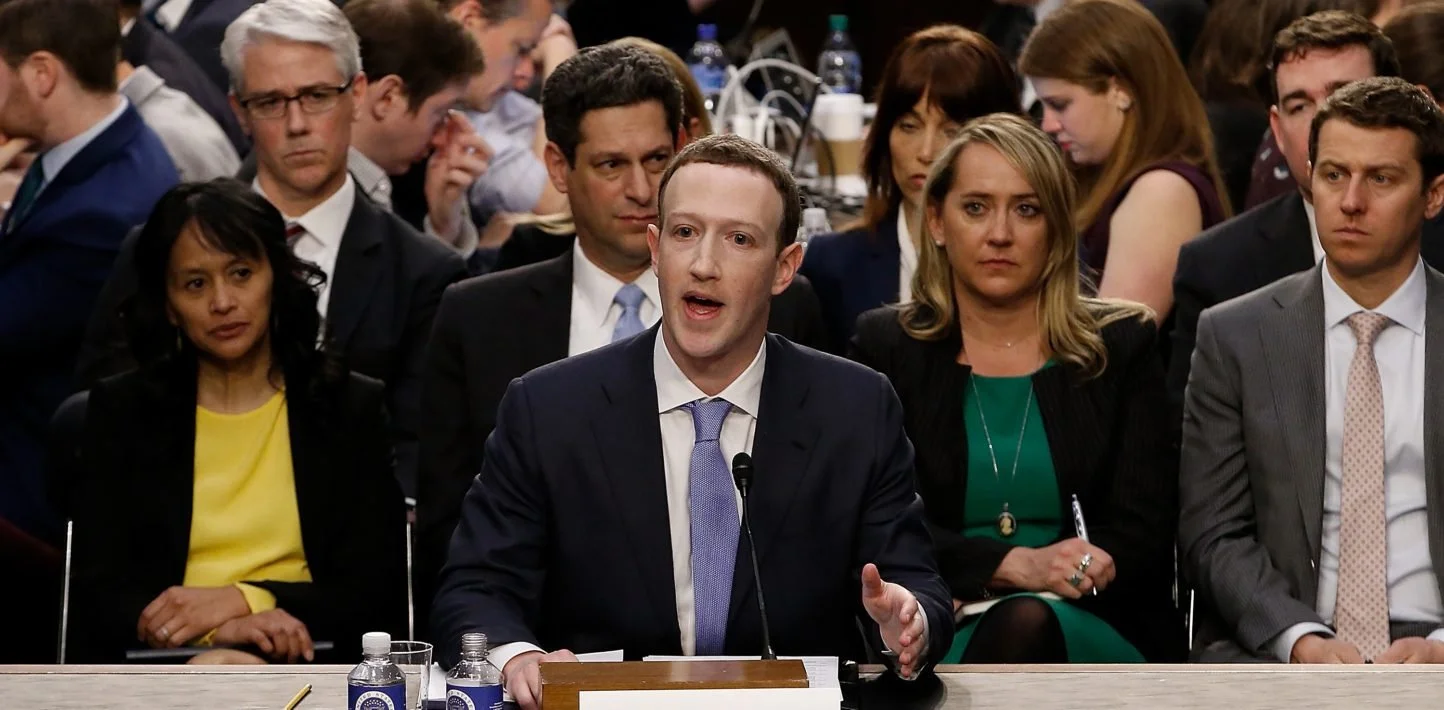
Meta CEO speaking to American Congress after Cambridge Analytica scandal
What made Cambridge Analytica particularly alarming was not simply the data harvesting itself, but what it revealed about the structure of modern political communication. Political persuasion had become hyper-personalised, basically invisible and algorithmically distributed. As is generally the way with such scandals, despite public outrage, little fundamentally changed.
Tech companies absorbed fines worth billions while continuing to generate vastly larger profits. In 2023 alone, Meta generated over $130 billion in revenue globally. Ball notes that many critics now argue these penalties are effectively “built into the business model”.
The problem, she argues, is that platforms are still largely shielded from liability for the content they host and amplify. Under legislation dating back to the early internet era, specifically Section 230 of the Communications Decency Act of 1996, social media companies are treated more or less like neutral publishers.
As a result, platforms can often avoid responsibility by framing harmful content as simply the product of user behaviour rather than algorithmic amplification.
“They’re blaming the users and not taking responsibility for the way the content is propagated through the platform,” Dr Ball says.
This raises a larger question. Who benefits from a political environment dominated by emotionally reactive discourse?
One of the clearest features of online political culture is how effectively structural issues disappear beneath endless culture war propaganda. Discussions around wealth inequality, labour exploitation or corporate power rarely trend with the same intensity as inflammatory debates around identity, immigration or manufactured outrage. In 2024, Oxfam reported that the world’s richest 1% accumulated more wealth than nearly two-thirds of humanity combined since 2020, yet online political discourse often focuses far more heavily on symbolic cultural conflict than economic inequality.
This is not accidental either. Structural analysis is difficult and it requires context, patience and sustained attention, precisely the things social media platforms erode. Rage-bait, on the other hand, is immediate and profitable.
To be clear, misinformation and propagandistic media long predate social media. Miller is careful to stress that society did not exist in some perfectly rational information utopia before the internet arrived.
“There’s always been commercial interests in broadcast and print,” he explains. “Journalism has always been a commercial pursuit itself.”
But social media accelerates and personalises these dynamics at an unprecedented scale. Billions of pieces of content are filtered into highly individualised feeds which are shaped by behavioural data and engagement prediction systems.
This can be particularly dangerous for younger audiences still forming political identities.
“Molly vs the Machines” is a documentary film exploring the tragic death of 14-year-old Molly Russell, who took her own life in 2017 after being exposed to harmful content on social media. The case exposed the devastating consequences recommendation systems can have when harmful content is repeatedly pushed through algorithms without proper checks. Although centred on mental health rather than political radicalisation, it highlighted the same underlying issue. Platforms optimise for engagement first and deal with social consequences later.

Molly vs the Machines - Channel 4
Research continues to suggest younger users are especially vulnerable to harmful recommendation systems. A 2023 report from Amnesty International found TikTok’s algorithm was capable of rapidly pushing vulnerable teenagers toward harmful mental health content based on minimal engagement signals. Still, neither Ball nor Miller believes the solution is as straightforward as censorship.
Ball supports stronger regulation and potentially banning social media for under-16s, but remains sceptical about simplistic solutions. “Banning it will not necessarily solve the problem,” she says. “It needs to be reformed in the way it’s designed.”
Miller similarly argues that understanding online behaviour requires acknowledging fundamental aspects of human psychology. People are naturally drawn toward information confirming their worldview.
“We try a lot harder to prove ourselves right than prove ourselves wrong,” he says.
Social media algorithms exploit this tendency perfectly. They learn what users emotionally respond to and feed them increasingly similar material, so confirmation itself becomes addictive.
The irony, then, is that platforms often marketed as tools for connection may instead be worsening societal fragmentation. Political identity online increasingly resembles fandom culture: aesthetic, performative and hostile to dissent. And somewhere inside this endless churn of discourse, ads are being sold and companies are seeing profit.
That may ultimately be the bleakest reality of all. The polarisation of young people is not just a cultural phenomenon or technological accident. It is also economically useful.
One of the strangest parts of growing up alongside social media has been watching people I knew drift politically in real time. Friends who, a few years earlier, cared more about football or nights out than immigration statistics suddenly started repeating algorithmic slogans about “invasions” and “Britain being lost.” And honestly, it would be naive to pretend some of those attitudes appeared from nowhere. Were some already susceptible to those narratives? Probably. I suppose prejudice rarely materialises in a vacuum.
But that is precisely the danger of engagement-driven platforms. Social media does not create every harmful belief from scratch. It identifies existing anxieties, frustrations or biases and relentlessly feeds users content intensifying them because outrage keeps people scrolling. The stories spreading furthest are rarely the most nuanced or representative. They are the ones most capable of provoking reaction. So, ask yourself. If emotional content that garner's reaction is the currency online, and we live in a world where wealth is nauseatingly put at the summit of all that is worthwhile, what kind of political culture do we risk tottering into?
Scotland’s Culture War Is Escalating - Because the Left Keeps Playing Defence
There’s something unsettling about watching fringe figures make bold claims under the banner of “debate” while Scotland’s progressive politics flounder on courtesy and caution. What was once dismissed as caricatured culture-war theatrics in Westminster and the murky corners of social media has spilled across the UK border, and Scotland’s left is still trying to respond with good manners and policy papers.
The latest flash point wasn’t in Holyrood or Westminster, it was at Abertay University in Dundee. A senior lecturer invited Marsha Sturgeon, operations director of Justice for Innocent Men Scotland (JIMS), to speak to criminology students about so-called “miscarriages of justice” in rape cases. The group’s website and social media have been criticised for targeting survivors and trivialising sexual violence, Sturgeon even posted online mocking two women survivors for lacking a “victim vibe”. In response to the backlash, the university confirmed the talk had not been approved by senior management and launched a review of external speaker policies, emphasising that these views “do not reflect those of Abertay University.”
Outrage was swift from students, survivor advocacy groups and politicians, culminating in counter-lectures organised by Dundee Women’s Aid and others, as well as graffiti on campus branding the lecturer a “rapist sympathiser”.
The incident reveals more than a campus free-speech row, it shows how cultural controversy is weaponised in contemporary politics. Right-wing groups frame such debates as an attack on free inquiry, while progressives default to bureaucratic responses that rarely resonate beyond Twitter threads. In a theatre of grievance, procedure loses to spectacle – and as if the left couldn’t make a spectacle of the right. Matthew Goodwin, Nigel Farage, take your pick.
This dynamic isn’t confined to universities. Scotland’s broader political landscape shows right-aligned parties and populist movements gaining traction while the left struggles to articulate a compelling, offensive narrative. In the Hamilton, Larkhall and Stonehouse by-election, Reform UK surged to 26.1% of the vote, closing in on both Labour and the SNP and signalling an appetite for alternatives to traditional party politics. Meanwhile, support for Reform in Scotland, a party once marginal north of the border, has climbed into double digits in recent polls, peaking around 18% in Holyrood voting intention, outpacing Labour and Conservatives on some measures.
Alongside electoral shifts, public sentiment on cultural questions is hardening. A recent Norstat poll found that over half of Scottish voters favour tougher immigration controls, up from previous years, a trend driven by voters across age and class groups.
Yet what makes these trends striking isn’t just the numbers — it’s how political leaders and commentators react. Take John Swinney’s trenchant critique of his own party’s shifting stance. At a recent SNP conference, he described both Labour and the Conservatives as being locked in “a race to the right”, cautioning that failure to counter Reform UK’s messaging simply hands the battlefield to their opponents.
Meanwhile, at the 2025 Scottish Labour conference, Sir Keir Starmer issued a rallying rhetoric against the SNP’s record on public services and governance, promising to deliver “a Scottish answer” to working-family woes, but stopped short of directly naming the broader cultural challenge posed by populist movements.
There’s a pattern here: on matters where cultural narratives dominate - immigration, identity, safety, justice - the left often falls back on procedural language (policy reviews, consultations) or vague appeals to inclusivity. These are noble aims, but they don’t shape narratives in the way that visceral stories of belonging, threat and agency do. While some on the left warn of “weakening institutions” or advocate cautious coalition-building, truly this amounts to defensiveness and an unwillingness to meet cultural conflicts on their own terms.
This is not merely a media or personal complaint. Even prominent left-wing voices argue like Ash Sarkar argue that the left’s reluctance to engage in cultural conflict leaves it on the back foot: successful movements often swim toward controversy, not away from it, using identity and conflict to build broader appeal rather than retreating to consensus and compromise.
What’s missing in Scotland is a positive offensive narrative that speaks to both economic and cultural anxieties. Working people who feel left behind by cost-of-living pressures, housing challenges and public-service strains aren’t necessarily buying into extremist rhetoric, but they are buying the stories that explain why they feel ignored. If the left only answers questions it prefers (funding childcare, building GP capacity) without addressing fears about community, identity, and fairness, it leaves a vacuum that others are all too happy to fill.
The far-right or culture-war fringe will continue to exploit that vacuum. They’ve mastered optics and grievance, and for every press release from a progressive spokesperson, there’s a viral meme from the opposition calling the left out for weakness or hypocrisy.
If Scotland’s left wants to shift the narrative - not just win elections but shape the civic conversation - it must move beyond defensive posture. That means offering a coherent, values-driven project that speaks directly to the experiences of voters: protecting rights and security, advocating fairness and belonging, confronting injustice without forfeiting moral clarity.
You can’t out-storyteller a populist by reciting cost-benefit analyses. In a culture war, narrative precedes policy, Scotland’s rightward drift won’t be checked by proceduralism alone.
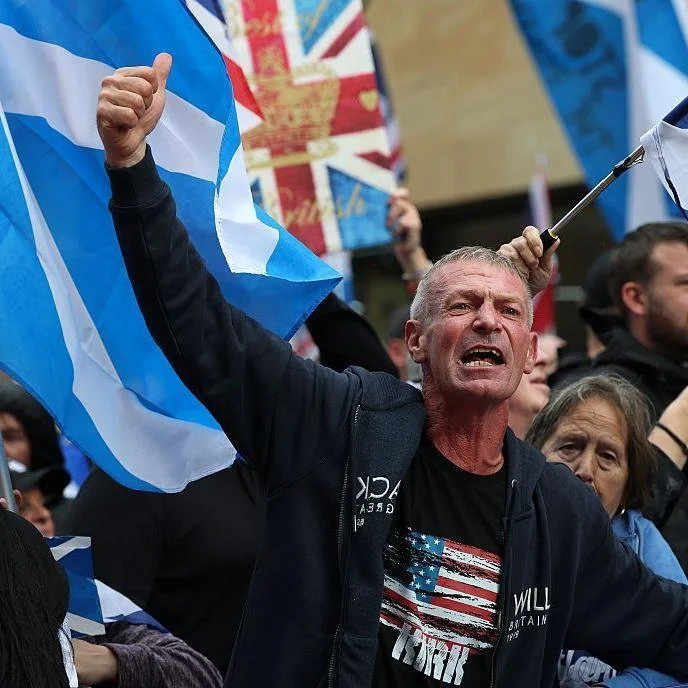
Right-wing march - Scotland
Scotland’s Missed Goals: How Inclusion Could Be Football’s Greatest Win
Inclusion, integrity, progressive. These are the words often used to highlight Scotland’s supposed moral distance from its southern neighbour, a nation priding itself on social conscience, from climate policy to public services. And yet, nowhere is this self-image more clearly contradicted than in Scottish football.
That this nation, so proud of egalitarian values, has failed so markedly to extend them to its national sport is more than ironic, it’s shameful. The first ethnic minority player to don the Scotland shirt was Andrew Watson in 1881. Over a century later, the list of successors remains painfully short. Che Adams and Nigel Quashie are often named as signs of progress, but neither was born or developed in Scotland. Their inclusion only highlights the problem, Scottish football isn’t producing these players through its own system, and often when there is an example the players are borrowed.
Consider this: across the top four divisions in Scotland, roughly 1,200 professional footballers are registered. Of those, Scoutable FC research indicates only seven or eight that progressed through the Scottish youth system come from ethnic minority backgrounds, a staggeringly low 0.6%. This figure is wildly out of sync with the demographics of modern Scotland, particularly in urban hubs like Glasgow and Edinburgh. Glasgow’s Pakistani community alone is four times larger than any other in the country. These are multicultural cities. Yet on the pitch, Scottish football remains monolithic.
The exclusion is not new. Historically, even Catholic players of Irish descent - despite being born and bred in Scotland - were sidelined. When Celtic’s all-Scottish Lisbon Lions won the European Cup in 1967, they earned just 113 international caps between them. Rangers’ Protestant stars from the same era - Greig, Baxter and Jardine - won more combined. Culture, not merit, defined opportunity. It goes without saying these three were some of the greatest players of their era and so the volume of appearances is not surprising, but the disparity in opportunity for the catholic stars of the same time is eye-opening, even if it’s not shocking.
The present isn’t much better. Denmark, with a similar population and ethnic breakdown, currently boasts nine national players from minority backgrounds. Scotland? Still clinging to tokenism. As Rob Webb described in Holyrood, there’s a “fit in or f*** off” mentality in Scottish football, both at grassroots and in boardrooms. For many young ethnic minority players, the dream of making it feels distant, not due to lack of talent, but lack of belonging.
That’s where people like Yusuf Bamba step in. As the founder of Scoutable FC, Bamba is doing the work that the SFA should have been doing years ago: creating a platform for talent that’s often overlooked.
“Scoutable has given a chance to players who’ve been overlooked by the system,” Bamba says. “These are talented young people who don’t always come through the usual routes, maybe because of where they’re from, who they know, or not having the right support system. We’ve created a space where their talent can actually be seen.”
Through showcase matches and trials, Scoutable has connected these players to real opportunities. But Bamba is under no illusions: grassroots change is not enough. “Real change needs to happen at a higher level, like the SFA or SPFL,” he explains. “In England, platforms like Scoutable get backing from the FA. In Scotland, we keep hearing ‘you’re doing a great job,’ but there’s no real help. Words don’t create change, support does.”
This lack of institutional buy-in isn’t limited to football’s governing bodies. Bamba recalls his attempts to secure sponsorship and media support with mixed success. “Some sponsors believed in what we were doing and were happy to contribute in the moment,” he says. “But when I pitched longer-term plans, it became more difficult. Even if they loved the idea in principle, they often pulled back with reasons why they couldn’t commit.”
As for media attention, Bamba acknowledges the exposure but questions the intent. “With the BBC, I felt the interest was driven by finding a story that fit their narrative at the time. I didn’t necessarily get the sense there was a long-term commitment to action.” He singles out broadcaster Jean Johansson as a rare exception, someone who followed up and genuinely tried to help. “Whether it was deeply heard or not, I can’t say,” Bamba adds, “but it hasn’t discouraged me. I’ll keep finding ways to make this issue heard.”
And the issue is continuously swept under the rug. Kevin Harper, who became the first black player to sign for Hibernian in the ’90s, speaking to Holyrood recalls racial abuse without institutional support . “That was 30 years ago,” he said. “But I don’t think we’ve moved that far forward.” Today, Marvin Bartley stands alone as the only black coach in the Scottish leagues. Meanwhile, two white managers have faced public accusations of racism. The arithmetic speaks volumes.
Worse still is the silence from those in power. When approached by Holyrood to comment on racism in the game, both the SFA and SPFL did not. The SFA offered a customary equality framework. The SPFL outsourced the inquiry to a PR firm. Neither engaged directly. Does this mean those institutions are turning a blind eye to racism altogether? I think at would be a harsh characterisation as there have been initiatives put in place over the last decade or so to improve the routes through which young Scottish footballers progress, and this would include players of all backgrounds. However the specific issue of underrepresented minority groups often feels like an after-thought, or in this case, not important enough to comment on. As Jordan Allison of Show Racism the Red Card put it: “If there are no people of colour at the decision-making table, how can these organisations understand the lived experiences of those they’re excluding?”
Scotland cannot expect to compete internationally while ignoring the full breadth of its talent. Inclusion isn’t just morally right—it’s strategic.
Our recent World Cup qualifying success may paper over the cracks and validate naysayers. Maybe.
However, one can only wonder that if Scottish football looked like Scotland itself, we wouldn’t have had to wait nearly three decades.
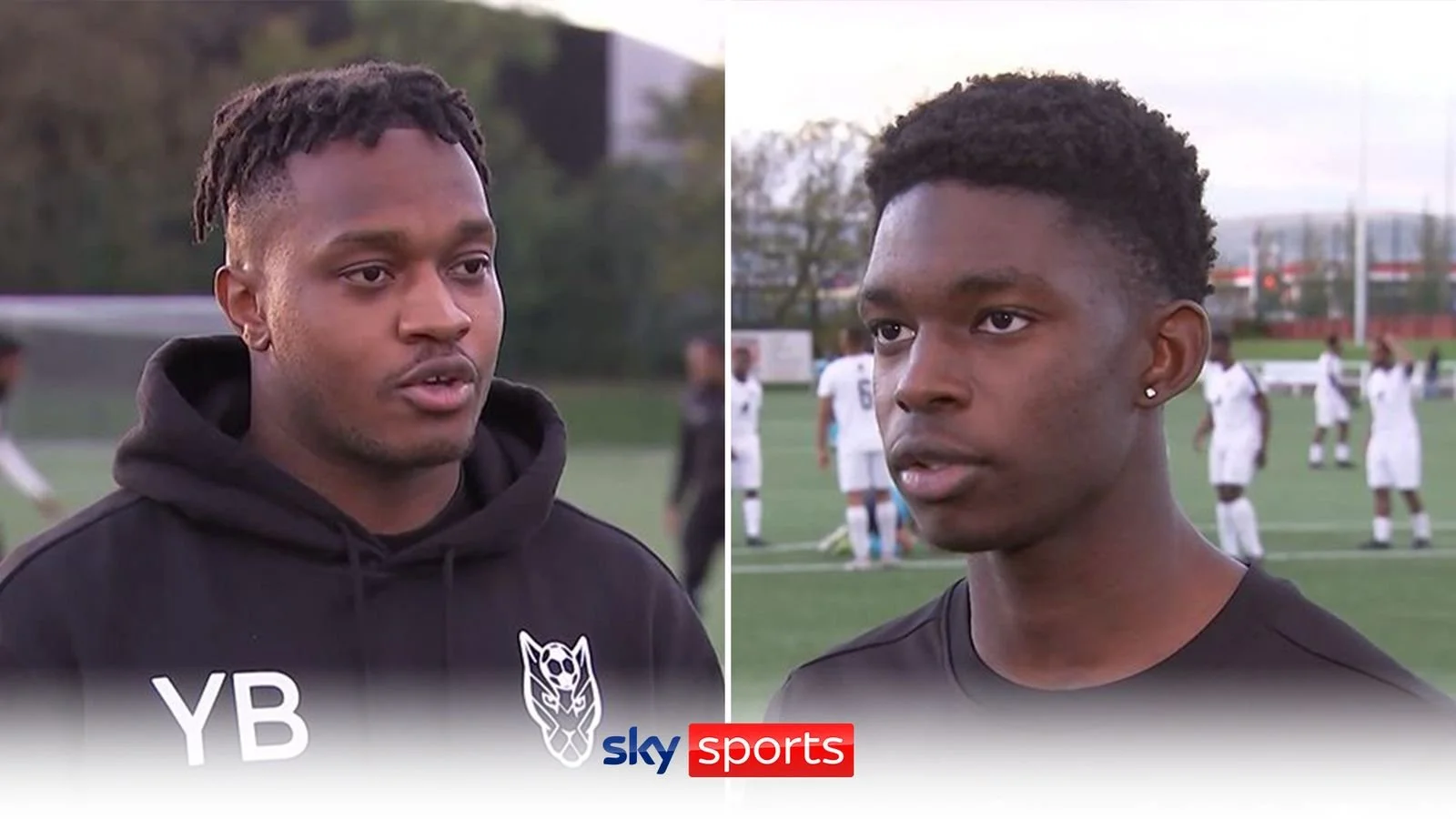
Yusuf Bamba and Scoutable FC player speaking to Sky Sports
Barriers, Belief and Belonging: The Mouhamed Niang Story
Mouhamed Niang, better known in Scottish football as Sena, has built a reputation as one of the most quietly resilient figures in the lower leagues. Born in Dakar, Senegal, in 1999 and raised between Manchester and Glasgow, Niang’s story is as much about belonging as it is about football. Over the years he has worn the colours of Rangers at youth level, Partick Thistle, Hartlepool United, Cove Rangers, and now Clyde FC — but the real victories have come off the pitch, in his fight for opportunity and recognition in a system that too often overlooks players like him.
When Sena moved from the streets of Dakar to Manchester aged five, then on to Glasgow, he found more than a new home. He found a love of football — and years of hurdles that would shape him into the player and man he would become.
“I was born in Dakar in 1999... I was a young five-year-old at first when I got to the UK. I was in Manchester from 2004 to 2007 then moved to Glasgow,” he recalls. “Scotland was good from the get-go, there weren’t many Black people back then, but they were good people, you know, everyone was helpful and it definitely made me the man that I am today.”
The move, motivated by his father’s hope for a better life abroad and family in Manchester, offered promise but no guarantees.
“It’s made me realise that there’s people that are going through way worse than you, like you never see people walking barefoot here,” he says, reflecting on the contrast between Senegal and the UK. That perspective would later help him endure one of the toughest tests of his young life, far more complicated than settling into a new culture.
As a near teenager, Niang’s ability caught the attention of Rangers F.C, this was after spending a few years back in Senegal to learn the language and culture. “I trialled with Rangers for two weeks and they wanted to sign me, but I wasn't able to play,” he says. “I got back from Senegal when I was 11 and I didn’t find out till I was 15 what was stopping me from playing.”
The problem wasn’t football — it was paperwork. During his time back in Senegal, a visa overstay had left Niang without the right documentation to play or work in the UK. “When I came back, I just went through hell. I couldn’t do a lot of things. I had to wait until the Home Office got back to me with the permit. It absolutely jeopardised the start of my career.”
For four crucial years, while his peers were developing in academies, Sena was stuck in limbo — considered at that point good enough for the country’s biggest club, but unable to step on the pitch. “Knowing that you’re good enough for a team like Rangers to be interested in you and not signing for them because of things out with your control. It’s really, really, tough.”
He didn’t give up. Playing with Pollok FC in the juniors kept him connected to the game. Then came help from a mentor.
“There was a guy called Bill Resite at Pollock, he’s a big figure in my life. He helped with a lot of things. Writing to the Home Office, everything he could.” Bill’s persistence paid off. In 2018, Niang signed for Partick Thistle, officially beginning his professional career.
Since then, he has been the definition of determination. At Thistle, he helped win Scottish League One in 2020–21, before moving to Hartlepool United in England and later returning north to join Cove Rangers and now Clyde. Each move marked another small triumph over the obstacles that once blocked his way.
“If it wasn’t because of those tough times, I wouldn’t be who I am today,” he says. “One thing is I’ve always remained the same, and because of that I've always felt love and respect regardless.”
But Niang’s journey speaks to a broader issue within Scottish football: the lack of support for immigrant, ethnic minority, and refugee players trying to navigate a system not built for them. Yes, Sena showed an indestructible resolve fighting these injustices, but that isn’t everyone. Not every child in a similar position has the mentality or the environment to support them.
“The governing bodies could have helped me more but that wasn’t the case at the time,” he admits. His experience shows how even the most talented young players can be left behind when bureaucracy and bias collide.
“For a lot of players, it’s very important they get support,” he says. “I’ve got a lot of things in mind to help the next generation stand tall.”
He wants to create pathways for kids who, like him, arrive in Scotland full of talent but unsure where to turn. Something he already has a part in with Scoutable United – a team created to give released academy and ethnic minority players a chance.
His message to them is simple but powerful: “Every kid should be given a fair chance regardless of colour, religion, or the country they’re from. It would have been easy for me to just turn my back and stop, but you will get over it, you just need to be strong mentally and keep going.”
Now 26, Niang has carved out a place for himself in the Scottish game. But his story remains a reminder — to the clubs, the associations, and the government — that talent alone isn’t enough without opportunity.
Because when the ball drops and the whistle blows, it should be talent that decides who gets to play, not paperwork.

Mouhamed “Sena” Niang signing for Partick Thistle - 2018
Five Blunders That Prove “New Labour” Is Just Old Conservatism in a Red Tie
It all begins with an idea.
Depending on how you squint, Keir Starmer’s Labour government could be viewed as a “calm” alternative to the chaotic reign of the Conservatives, a so-called return to stability.
As Starmer himself put it in an interview with BBC News, “Stability is the foundation of everything we want to achieve” (watch here: https://www.youtube.com/watch?v=Y0XkJ1pO6qE).
But that’s a dangerously low bar. Because while the Tories broke the country, Labour’s current leadership is, in many ways, refusing to fix it. In fact, they’re actively reinforcing the same systems of cruelty, hierarchy, and deference to capital they once claimed to oppose.
Here are five of the most damning failures of the Starmer’s administration so far, failures that don’t just mirror Conservative policy, but amplify its worst instincts.
1. Conditional Promises on Welfare & Workers’ Rights — Vague Reform, Meaningless Waiting
Labour has repeatedly promised reforms for workers, ending qualifying periods for rights, protecting gig workers, restoring union powers, but always with disclaimers like “when resources allow” or “subject to fiscal constraints.”
Take the two-child benefit cap: a Conservative-era policy Labour has said it wants to scrap “eventually.” Meanwhile, it remains in place, punishing working-class families and pushing children into poverty.
Think tanks estimate lifting the cap would cost around £3–4.5 billion per year and lift hundreds of thousands of children out of poverty. Yet Labour suspended MPs who voted to scrap it and still refuses to make it a priority.
What a competent government would do: Repeal the cap immediately as a moral necessity. Fund it through wealth taxes, closing corporate loopholes, and embed child poverty reduction targets into law so governments can't delay or dodge responsibility.
2. £13.4 Billion for Defence, While Aid & Services Crumble
Starmer has committed to raising defence spending to 2.5% of GDP by 2027, costing an extra £13.4 billion annually. Even if inflation-adjusted estimates put it closer to £6 billion, that’s still a staggering rise.
To help fund this, Labour is cutting international aid from 0.5% of Gross National Income to 0.3%.
Meanwhile: homelessness is rising, mental health services are in crisis, schools are underfunded, and poverty deepens. The promise to reduce child poverty is pushed aside while arms manufacturers profit.
What a moral government would do: Invest first in public health, housing, education, and mental health. Defence spending should never starve essential services. Aid should grow, not shrink. Foreign policy should prioritise peace, not preparation for war.
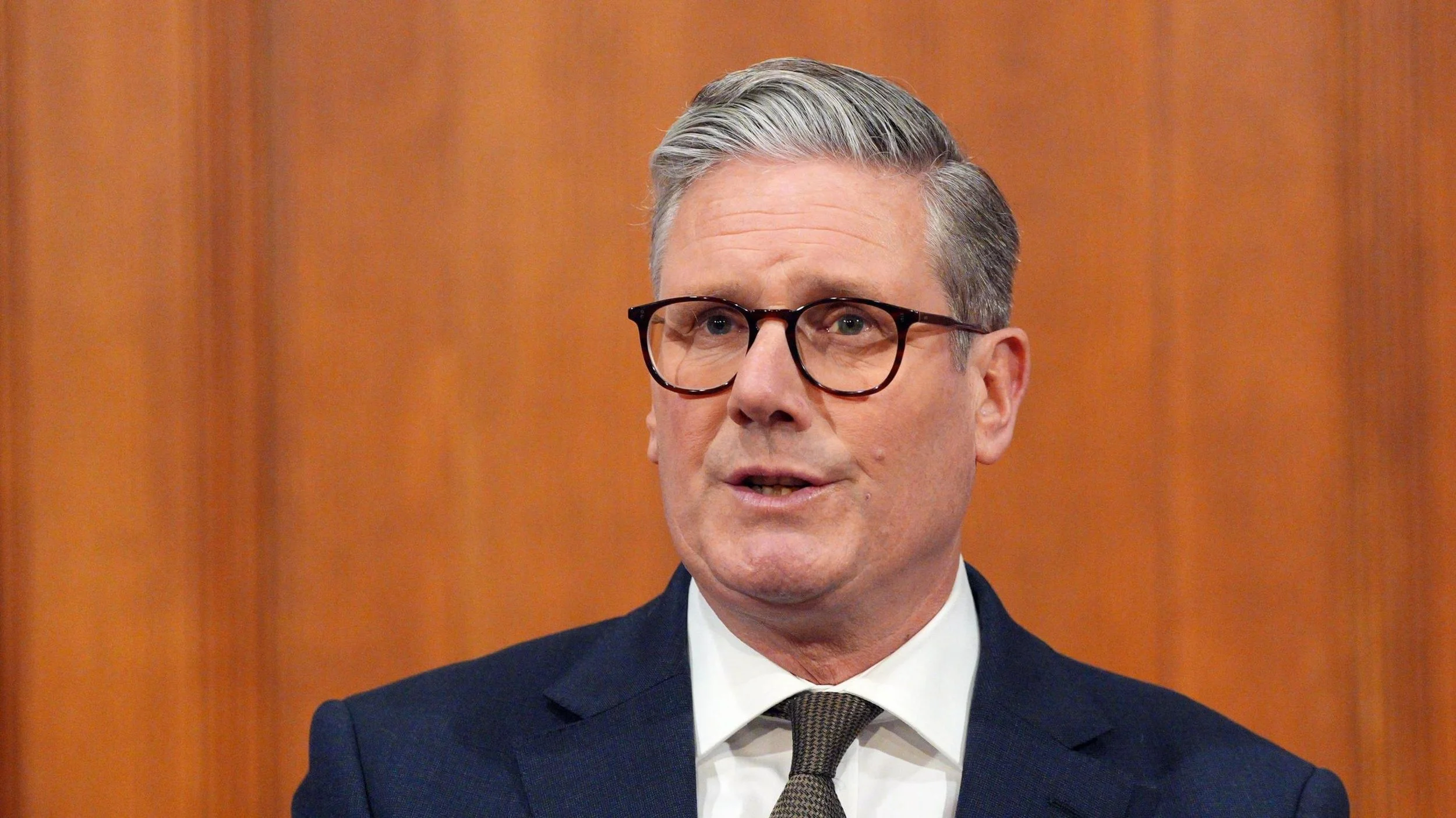
Kier Starmer speaking after winning 2024 election
3. Gaza: Silence, Complicity, or Worse
Labour’s position on Gaza has been indefensible. Even after UN findings claiming Israel’s actions in Gaza amount to genocide, the party has remained largely silent, or worse, complicit.
Starmer previously defended Israel’s “right” to cut off water and power to Gaza, actions considered collective punishment under international law. Arms export licences to Israel still stand in many cases, despite catastrophic humanitarian consequences. His performative recognition of Palestine as a state doesn’t fool anyone free of the Netanyahu tinted glasses.
What a principled government would do: Suspend all arms exports to Israel immediately. Recognise Palestine fully, not when politically convenient. Fund humanitarian aid and stand firm for international law, even when it challenges allies or threatens donor relationships.
4. Authoritarian Discipline & Breaking Promises
Labour has adopted a culture of internal authoritarianism. MPs who voted to scrap the two-child cap had the whip suspended.
The 2024 manifesto promised an “ambitious strategy to reduce child poverty” and end “mass dependence on food banks.” But keeping policies like the two-child cap and real-terms welfare cuts shreds those promises.
What a competent and democratic government would do: Embrace internal debate, allow ethical dissent, and uphold its own manifesto. Policy must be shaped with input from communities, unions, and the people affected, not imposed top-down from Headquarters.
5. Kissing Trump’s Ring & Serving Empire Over People
Labour’s defence and foreign policies increasingly echo the Conservative obsession with aligning tightly to U.S. geopolitical interests, regardless of moral cost.
Raising defence spending to meet NATO targets while cutting international aid mirrors exactly the kind of Trump-era militarism that many hoped Labour would reject.
And yet: homelessness, poverty, mental illness, Labour claims we “can’t afford” to address these properly. But we can afford warships and F-35s? The contradiction is grotesque.
What a responsible government would do: Build a foreign policy rooted in human rights and diplomacy. Fund domestic crises first like housing, health, education. Say no to U.S.-style militarism and yes to independent, compassionate international leadership.
The Alternative Is Not More of the Same
These five failures show Starmer’s government has not so much cleared away Conservative damage as adopted much of its playbook, cutting social supports, deferring reform, pouring money into war and defence, and protecting power from below.
For those disillusioned, there are alternatives: The Green Party, under its new leader Zack Polanski, promises stronger action on climate, housing justice, wealth redistribution, anti‑imperialist foreign policy, and radical welfare reform.
“Your party” under Sultana & Corbyn would (in principle) restore universal welfare, oppose arms exports that violate international law, emphasise mental health and housing as moral priorities, and re‑centre democracy both domestically and internationally.
All this despite the current inner-party conflicts, which yes don't look great optically, but do not define the movements ambition.
If you believe politics must be more than administration, if you believe it should carry moral weight in every decision, then these alternatives matter. Because the real choice isn’t between “Labour vs Conservative” in name; it’s between those who govern for the rich and powerful, and those who govern for the vulnerable and the many.
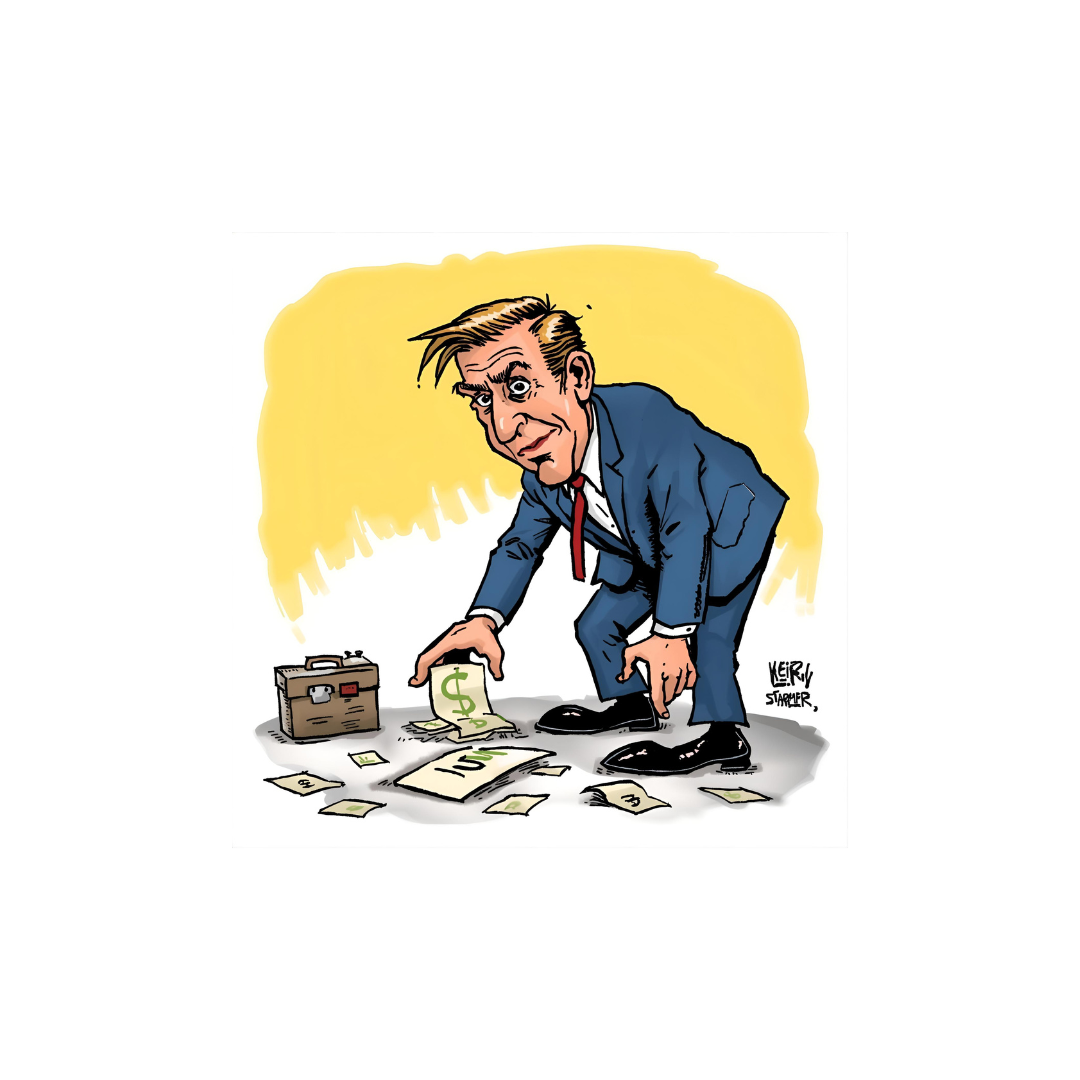
Starmer’s real motivation
Alfie Robinson
Billionaire Media Moguls: How Wealth Controls Truth and Threatens Democracy
It all begins with an idea.
Depending upon which side of the political spectrum you are perched, the word “billionaire” can just as easily denote immorality as it can achievement. It can, of course, be perceived as personal success, which by its very definition is what capitalist ideology strives for—albeit at the expense of others. However, with enough discernment, the entire concept can be recognised for what it truly is: the ultimate depiction of economic anarchy, concentration of power, and the erosion of social responsibility in favour of individualism.
In Albert Einstein's book “Why Socialism” he broaches all these ideas. One term he uses, which seamlessly describes our present political and social climate, is “control of information.” Or, to expound on the phrase—the idea that in a capitalist society (like the one we currently exist within), private capitalists often control the media and education, which limits the ability of individuals to make informed decisions and participate effectively in the political process. Or, to simplify: your bank account determines power, not merit.
This creates the dangerous possibility that personal agendas might get in the way of the spread of impartial information. Does this sound familiar? Charlatans like Elon Musk, Jeff Bezos, Rupert Murdoch, or even Mark Zuckerberg already have an incredible monopoly on media, funded by a similarly incredible accumulation of money. And they don't exactly hide their political allegiances. They are a true-to-canon, contemporary image of precisely what Einstein discussed over seven decades ago. It’s alarming.
Twitter CEO Elon Musk is the most forefront example of wealth over merit. His hand isn’t in multiple proverbial cookie jars; rather, it's more like a game of whac-a-mole, where his hand is ruthlessly trying to hit the jackpot all over different sectors of society—just for success to slip away as soon as he arrives. His wealth and subsequent societal perception—as we all allow ourselves to be brainwashed by capitalism and treat billionaires like deities—have allowed him to open doors I imagine even he thought were childproofed.
DOGE is not just the name of some meme coin that Musk used his massive influence to convince fans to buy so he could sell, run away with the money, and leave the buyers plotless. It is also a satirical reference to the so-called “Department of Government Efficiency,” a laughable but real agency, representing the growing crossover between private influence and public policy. In real terms, Musk has received increasing political influence, especially under politicians like Donald Trump, who have emboldened figures like him under the guise of “efficiency” and “innovation.”
So, now that his influence and wallet have granted him political visibility in America, let's look at the job he’s done so far—and whether he possesses any political cognisance beyond the far-right, Trumpian talking points he so shamelessly regurgitates.
He claimed to uncover fraud within the Social Security Department. From the looks of things, he supposedly found tens of millions of 150-year-old dead Americans receiving improper payments. So—job well done, Elon? It would be, if not for the fact that experts speaking to ABC News explained nothing could be further from the truth. He was simply misrepresenting the real numbers. In reality, of the 67 million individuals receiving Social Security, only 0.1% are over 100, and improper payments account for just 1% of all distributed funds.
Okay, so politics may not be where his talent lies—but surely a businessman of his reputation has taken X (formerly Twitter) to new, soaring heights? Unfortunately, it seems he overpaid for the company, attempted to back out, and was then forced by the sellers to follow through—leaving him with $13 billion in debt from the outset. Not the most fruitful of beginnings, but certainly a platform as widespread as X has the potential to succeed. And with Musk’s business acumen, starting off sub-zero financially should have been just a hiccup.
Yet once again, the lure of capital gain came before logic. His knee-jerk reaction to cut 75% of X’s staff to address the debt—many of whom handled the platform’s day-to-day maintenance—led to its value plummeting, according to American finance company Fidelity, which owns a stake in X Holdings. It’s evident that neither his political nous nor his business savvy earned him the positions he holds; rather, it is his billionaire status that has afforded him the power to influence both information and policy.
Dr. Bruce Drushel, professor of media and journalism at Miami University, argues this is symptomatic of a much wider cultural problem. “In the United States, we seem to have confused the accumulation of wealth with merit,” he says. “We’ve reached a point where we assume someone who has amassed billions is smart, capable, and trustworthy—when in fact, that money often buys influence and control, not wisdom.”
There is also the case of Rupert Murdoch, who owns such a vast disinformation media corpus across the Western world it’s frightening. And that accusation of disinformation is not baseless—Preston Padden, Ken Solomon, and Bill Reyner, three former high-ranking Fox News executives, have all criticised the network. This is extremely dangerous, and it seems, in some ways, the system has won.
Dominic Ponsford, Editor-in-Chief at Press Gazette, notes that while billionaire-owned media can be damaging, not all billionaire influence is inherently malign. “We have seen a massive shift from traditional media to digital platforms, and that space has been exploited by some for personal gain or political sway,” he said. “But it's important to also ask whether the public service journalism model can survive without patronage—because many advertisers have fled and digital ad revenue has mostly gone to Big Tech.”
Indeed, while some billionaire owners may support journalistic freedom, the very structure of capitalist media still hinges on the decisions of the few. Drushel notes this contradiction: “Even when billionaire owners claim to champion press freedom, their influence is always latent. Editorial independence becomes something that can be given—and just as easily taken away.”
This is not a billionaire smear campaign—regardless of whether that is justified. But highlighting their deficiencies illustrates the power of money in this socio-economic system. Social ownership, especially of media enterprises, is a necessity to diminish the power of private capitalists and would allow for more impartial information to be spread to the masses.
In today’s world, individuals often seek knowledge through more modern means of news, like Musk’s X. Therefore, it is extremely problematic that the owner is someone who has a direct political agenda in relation to Trump—and this has been proven through the copious instances of misinformation on the platform, as well as what’s permitted. Like allowing misinformation maestro Alex Jones to be reinstated or alluding to the Democrats allowing illegal immigrants into the country for votes. Or even removing pro-Palestine supporters due to ‘Hamas affiliation.’
It is no surprise then, that within minutes of accessing the app, the pro-Israel stance taken by Trump and Musk is pushed through hasbara and Islamophobic, anti-immigrant content. What does this lack of critical analysis and diminishing reliance on empirical evidence to form opinions mean for journalism?
Cartoonist Ana Tenales resigned from The Washington Post after her cartoon was rejected due to the critical nature in which it portrayed Washington Post owner, Jeff Bezos (another friend of Trump). Since when did the depth of your pockets, and the breadth and significance of your affiliates, shield you from criticism to this degree?
There is a real threat that, through the sheer percentage of wealth owned by a few narcissistic egos like Elon Musk, Jeff Bezos, or Rupert Murdoch, true journalism and the dissemination of real facts backed by evidence could be at its climax—and in some ways, that threat has been realised.
But the consequences of this reality go far beyond just media bias. “If a billionaire has control over the primary channels through which people get their news, their ability to shape discourse is virtually unchecked,” said Drushel. “It’s not just about shaping narratives—they can decide which stories are told, which aren’t, and how we perceive the world.”
This power dynamic doesn’t just warp journalism—it warps democracy. A public increasingly dependent on billionaire-owned platforms for news becomes vulnerable to distortion, to curated truths, and to disinformation disguised as dialogue. And while tech billionaires style themselves as visionaries disrupting legacy systems, many of them are, ironically, reinforcing the oldest trick in the book: controlling the story to control the society.
The answer isn’t simple. Publicly funded journalism, cooperative ownership models, and stronger media literacy education could each play a role in reshaping how information is created, consumed, and contextualised. But without a serious re-evaluation of how much control is too much, especially in media, we risk sleepwalking into an age where objective truth becomes optional, determined not by evidence, but by wealth.
History offers a cautionary tale: In the early 20th century, media mogul William Randolph Hearst wielded his newspaper empire to whip up public sentiment for war with Spain, exaggerating stories to sell papers and shape policy. This "yellow journalism" not only distorted facts but helped push the United States into the Spanish-American War in 1898. It reminds us that concentrated media power can have dangerous consequences—when ownership dictates what people believe, democracy itself is at risk.
As Drushel concludes, “In a world where media can be bought, truth becomes a commodity. And once that happens, the integrity of journalism—and the democracy it supports—starts to unravel.”

Cartoon: Donald Trump and Elon Musk enjoying the fruits of appeasing apartheid
Alfie Robinson
Why is Islamophobia on the rise in the UK?
It all begins with an idea.
Islam has always been a misunderstood faith in the UK, and its followers have faced discrimination ever since the first Muslims migrated here 300 years ago from India. Although we like to believe that three decades of progress have helped us move toward understanding and integration, the reality for modern Muslims within the UK remains one of subliminal prejudice, inaccurate preconceptions, and, ultimately, fear.
This fear is not unfounded. The Home Office reports 3,866 religiously motivated hate crimes against Muslims in the year ending March 2024. This makes up 40% of all hate crimes of this kind, meaning Islam is the most affected religion by a large margin. Government reports on hate crime over the past five years show how disproportionate these crimes are toward the Muslim community. Muslims have topped the list each year, with the percentage steadily increasing.
Omar Afzal, Outreach and Communities Coordinator for Glasgow Central Mosque, describes the fear: "The fear is heightened, particularly after the riots in England, which vividly show the effects of Islamophobia rising. It shows how quickly Islamophobia can become violent, leaving Muslim communities living in fear. But since 9/11, there’s been a shift in how Islamophobia manifests. Before, someone might have insulted you based on your race, but now it’s more about your Muslimness. An Asian man with a long beard or a woman in a headscarf becomes an easy target. And women tend to be victims more often, probably because they’re more visibly Muslim."
The rise of Islamophobia after the 9/11 attacks didn’t happen in isolation. Western media, particularly networks like NBC and ABC, played a significant role in shaping public perception of Islam. Kimberly A. Powell, in Communication Studies, explains how these outlets, along with powerful governmental figures, framed the attacks as a war on America by Islam, presenting it as an existential threat. This portrayal linked an extreme act of terrorism to an entire religion, further solidifying the stereotype of Islam as a religion of terror.
The media’s biased use of the term “terrorism” also plays a role. When was the last time we heard the term used for a white American school shooter or someone like Greg McMichael, who killed a Black jogger in 2020? The term seems to apply only to attacks by non-white, Muslim individuals, while white perpetrators are often portrayed as troubled or mentally ill and attributed reason, highlighting a stark double standard.
Fast forward to today, and these framing methods persist. Charity Tell Mama documented a sharp rise in Islamophobia in the UK in the four months following the Hamas-led October 7th attack. This uptick coincided with coverage of the Israel-Palestine conflict, a connection hard to overlook, especially when considering the portrayals in British outlets like the BBC.
One such example involved Maccabi Tel Aviv fans travelling to Amsterdam for a football match. They ripped down Palestine flags, attacked locals, and spread anti-Islam hate. Yet, the BBC downplayed the incident, describing it as "Youths on scooters attack Tel Aviv fans" and emphasizing the need to combat anti-Semitism. This characterization, avoids acknowledging the full scale of Islamophobic behaviour present in such actions, underscoring how media framing can serve political or ideological goals.
Professor Tahir Abbas, a scholar on radicalization and Islamophobia at Leiden University, argues that Western media plays a significant role in shaping public discourse surrounding the Israel-Palestine conflict. He explains that "media coverage often perpetuates orientalist paradigms and colonial power relations" through selective framing of events. These biases are not just isolated to news reporting but reflect deeper institutional practices that stem from historical power dynamics, colonial legacies, and political-economic interests.
Abbas emphasizes that these biases aren’t simply the result of poor journalistic standards. They are embedded in the very structures of media institutions. "The concentration of media ownership and control," he notes, "reinforces dominant cultural narratives and systematically excludes diverse voices from decision-making positions." This leads to a self-reinforcing cycle where biased reporting continues to perpetuate prejudice, making it harder to challenge existing power structures that disadvantage Muslim communities.
So, what can be done to shift the narrative and reduce Islamophobia in the UK?
For Abbas, addressing the issue requires a comprehensive approach: "It’s about structural interventions at multiple levels. This includes robust hate crime legislation, media reform, and better diversity in public institutions. At the individual and community level, we need critical media literacy, inter-community dialogue, and support for grassroots Muslim organizations."
Omar Afzal adds that meaningful change also requires a legislative shift. "The government needs to improve reporting on how Islamophobia manifests in different sectors, and they need to adopt a formal definition of Islamophobia. Without acknowledging that a problem exists, you can't begin to strategize a solution." Afzal also points out that education plays a crucial role in challenging the narrative around Muslims in the UK. "We need to teach the true history of Muslims in this country—their contributions to science, medicine, and technology—and provide a counter-narrative to both the media and the far-right."
Afzal further emphasizes the importance of allyship in fighting Islamophobia: "As individuals, we need to call out hate crimes, support victims, and report incidents to the authorities. It’s also important to take the time to learn about the religion itself."
Media coverage will always influence public opinion, that much is clear, and the biases present in that coverage seep into broader societal dialogues. It’s crucial, therefore, that facts take precedence over feelings when it comes to representing Islam and Muslims. As Afzal concludes, "To create a fairer and less discriminatory environment, we must confront Islamophobia head-on and challenge the narratives that sustain it."
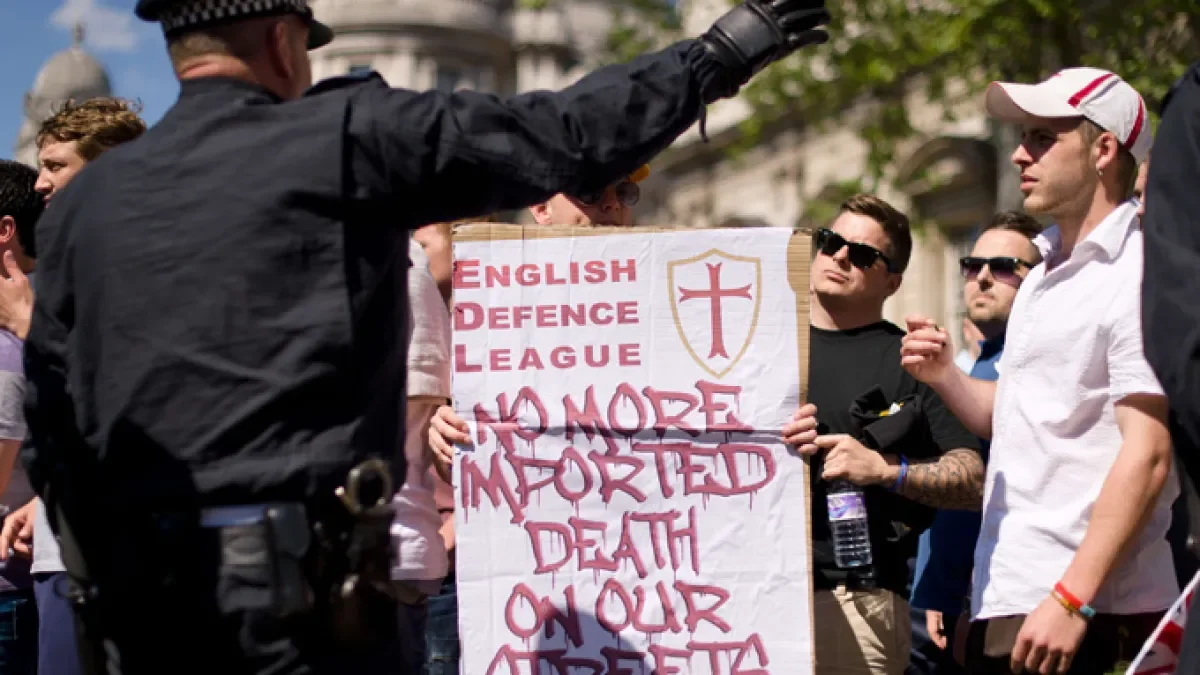
Anti-immigrant demonstration in England
Alfie Robinson

Scotland’s second-class sport
It all begins with an idea.
Basketball in Scotland has a strange double life. On paper, it is everywhere. It appears in council inclusion strategies, youth diversion programmes, and government-funded initiatives designed to improve wellbeing, participation, and community cohesion. It is regularly praised for its ability to reach young people who other sports struggle to engage, particularly in working-class and ethnic minority communities. In funding reports, it is framed as progressive, accessible, and socially valuable.
In real life, it survives on sacrifice.
I learned that not from policy documents but from watching my brother Louis try to make his way through the Scottish basketball system. While my own football career was cushioned, not free, but institutionally supported, basketball demanded constant personal subsidy. Long drives to training, juggling work around sessions, paying to play, paying to travel. Family money covered what the system didn’t. Time off work replaced paid development. Even representing Scotland or playing for the Glasgow Rocks came with little in the way of financial security.
It's the usual, rhetoric over commitment.
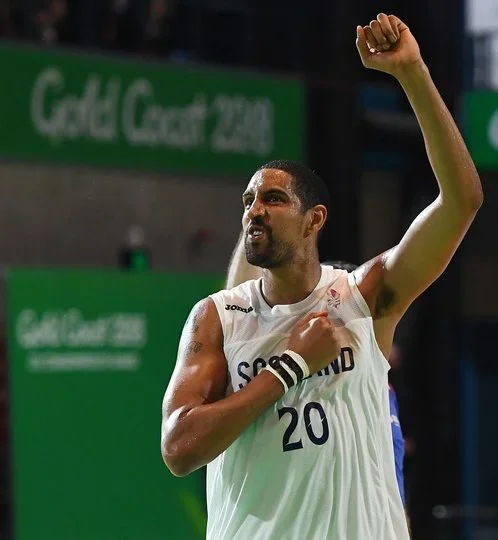
Kieron Achara representing Scotland at the Stirling Highland Games
Sportscotland, the national agency responsible for public investment in sport, distributes around £36.7 million annually across governing bodies and grassroots programmes. Within that framework, a hierarchy remains firmly intact. Football is treated as economic infrastructure, credited with contributing around £820 million a year to the Scottish economy and supporting more than 14,000 jobs. Rugby, too, enjoys political protection as a performance sport tied to national identity and prestige. Basketball, by contrast, is overwhelmingly funded through social programmes rather than sporting pathways.
Since 2008, CashBack for Communities has invested over £110 million into projects aimed at youth diversion and inclusion, with basketball a recurring beneficiary. Basketballscotland’s most visible public funding streams are routed through charitable arms and partners such as Inspiring Scotland, money tied to participation numbers, wellbeing outcomes, and community engagement. Important work, undoubtedly. But this is funding designed to manage social outcomes, not to build sustainable sporting careers.
Former Scotland and Great Britain basketball captain Kieron Achara had this to say speaking to BBC back in 2020:
“"I believe there are barriers. It's not just a race thing, it's about social status, low incomes and such like. If you look at sports clubs, you are paying your direct debit of £40 or £50 a month. Then parents have to drive their children to sessions because facilities aren't easily accessible.
"It's not the case that kids from the BAME community aren't interested in sport. Only once we get to the stage of understanding that barriers are there we can knock them down."
Louis felt the consequences of that early. “Most of it was self-funded,” he says. “Compared to other sports that were just as popular, there was very little funding. To play for a team you had to pay and pay for transport. And of course, the more you paid, the better the amenities. Teams with wealthier players had better facilities.”
Access, in other words, was classed.
That class filtering was reinforced culturally. “There was still a distinctly Glasgow community around basketball when I was coming through,” Louis explains, “probably a relic of when basketball was more popular. But it was always small. Football was the priority, and even other sports like badminton seemed to be taken more seriously.”
Basketball, he argues, occupies an awkward space in Scotland’s sporting imagination. “It’s a sport that lends itself really well to a working-class environment and thrives there. But in Scotland, that role is already taken by football. So basketball ends up either being niche, or pushed into more affluent suburbs, where it never really gets mass appeal.”
Achara speaking to BBC also commented on this:
"It's the more affluent people who are making it to the next level. You can see it in football, which used to be a working-class sport. There's been a culture shift there too.”
That contradiction plays out vividly in schools. Growing up in a predominantly white Catholic school in Scotstoun, basketball became a marker of identity for Louis. “It was mostly non-white students playing,” he says. “It definitely became something that unified a lot of ethnic minority students across year groups.”
That pattern repeats across Glasgow. Outdoor courts fill up every summer evening. Places like Mansfield are informal meeting points - open, mixed, and accessible. Louis points out something often overlooked in discussions about sport and space: “They’re gender diverse as well. Women feel comfortable playing and hanging out. With the right funding, that could be developed into an actual culture.”
Jason McCullogh has seen this firsthand for over a decade. A player, coach, and long-time advocate for better facilities in Glasgow, he has worked at grassroots and college level, often pushing simply for usable courts and affordable access.
“Basketball is really good for integration,” he says. “You walk onto an outdoor court and it doesn’t matter where you’re from, what you look like, what accent you’ve got. If you can play, you’re in, and half the time even if you can’t people teach you.”
He contrasts that openness with football’s cultural baggage in Scotland. “Football can come with sectarian stuff, territorial stuff, club loyalties. Basketball doesn’t really have that. It’s usually a neutral space. You end up respecting people based on effort rather than background.”
Despite that, basketball’s diversity has never translated into political leverage. The sport is praised for reaching working-class and ethnic minority communities yet remains marginal in decision-making spaces. Representation at board, council, and national level is limited and funding reflects that imbalance.
The idea that basketball is a meritocracy collapses quickly under scrutiny. “Making it to any real level of success out of Scotland is incredibly rare,” Louis says. “So, talent should be the main factor. But there were definitely biases when I played.”
6’11 big man Robert Archibald is still the only Scottish-born player to reach the perceived pinnacle of basketball, the NBA.
Most players at national league level in Glasgow were from ethnic minority backgrounds, he notes, and that shaped how they were treated. “By refs, by other coaches, by spectators, you felt it.” Money mattered too. “Some players could be sure of spots on teams because they brought funding with them.”
Talent loss, then, is not accidental. It is systemic.
Jason sees the same dynamic from the other side. “Basketball in this country is heavily reliant on unpaid labour and pure goodwill,” he says. “That tells you exactly where it sits in the pecking order.”
Coaches, referees, administrators, most are volunteers. Many pay out of their own pockets. “If that goodwill disappeared,” he adds, “a lot of these clubs just wouldn’t exist.”
This reliance has consequences. Burnout is common. Experienced coaches eventually step away because unpaid labour can’t compete with jobs, families, or basic survival. When they go, so does institutional memory, trust, and stability. “That’s years of experience gone,” Jason says. “Years of relationships with communities.”
The contrast with football is stark. Even at relatively low levels, football benefits from paid staff, secure facilities, and consistent funding. Basketball scrapes by on short-term grants and volunteer commitment.
Scottish sport policy prides itself on inclusion. Participation targets are highlighted. Press releases celebrate diversity. But accountability is thin.
“If councils and national bodies say basketball is part of their inclusion strategy,” Jason argues, “then they should be measured on outcomes. Retention in deprived areas. Diversity in coaching and leadership. Long-term funding commitments.”
Instead, inclusion often functions as branding. Basketball is useful to the state because it does heavy social lifting cheaply. It keeps young people active. It builds informal integration. It creates community space. But when it comes time to invest materially - courts, paid roles, elite pathways - the commitment evaporates.
That contradiction mirrors a wider Scottish habit: comfort with progressive language, discomfort with redistributive action. Scotland likes the idea of fairness more than the practice of it.
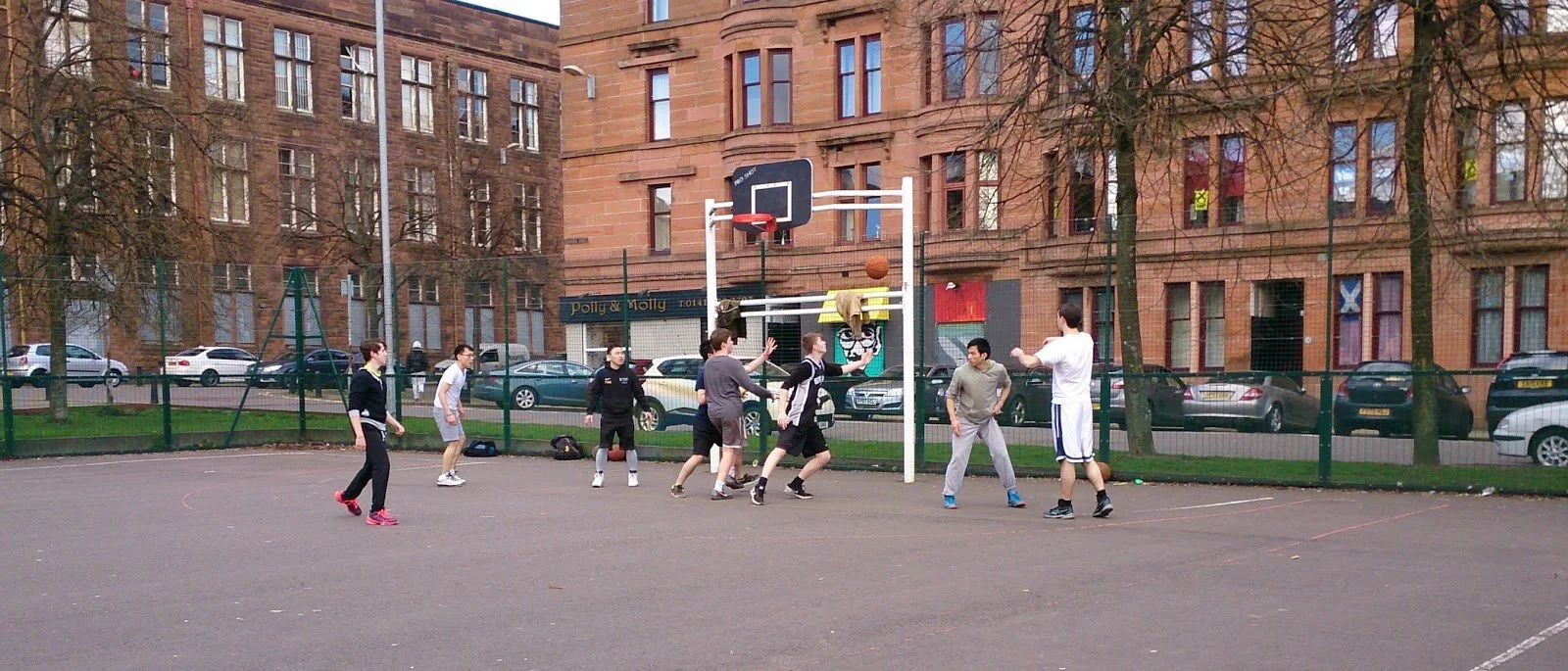
pickup game at Mansfield Park, Glasgow
Basketball is not asking to replace football. It is asking to be taken seriously. The appetite is visible on outdoor courts every summer. The diversity is real. The social value is proven. What’s missing is political will.
“If Scotland genuinely believes the stories it tells about itself,” Jason says, “basketball is a perfect test case. The game already brings people together naturally. All that’s missing is the will to put something back into it.”
Until then, the consequences are predictable: unpaid labour, filtered access, lost talent, and stalled futures. Basketball will continue to be praised, underfunded, and quietly neglected while headlining as a marker for diversity in our country. Ironic? I suppose, but irony is often lost on people representing a system that survives on posturing.