Five Blunders That Prove “New Labour” Is Just Old Conservatism in a Red Tie
Depending on how you squint, Keir Starmer’s Labour government could be viewed as a “calm” alternative to the chaotic reign of the Conservatives, a so-called return to stability.
As Starmer himself put it in an interview with BBC News, “Stability is the foundation of everything we want to achieve” (watch here: https://www.youtube.com/watch?v=Y0XkJ1pO6qE).
But that’s a dangerously low bar. Because while the Tories broke the country, Labour’s current leadership is, in many ways, refusing to fix it. In fact, they’re actively reinforcing the same systems of cruelty, hierarchy, and deference to capital they once claimed to oppose.
Here are five of the most damning failures of the Starmer’s administration so far, failures that don’t just mirror Conservative policy, but amplify its worst instincts.
1. Conditional Promises on Welfare & Workers’ Rights — Vague Reform, Meaningless Waiting
Labour has repeatedly promised reforms for workers, ending qualifying periods for rights, protecting gig workers, restoring union powers, but always with disclaimers like “when resources allow” or “subject to fiscal constraints.”
Take the two-child benefit cap: a Conservative-era policy Labour has said it wants to scrap “eventually.” Meanwhile, it remains in place, punishing working-class families and pushing children into poverty.
Think tanks estimate lifting the cap would cost around £3–4.5 billion per year and lift hundreds of thousands of children out of poverty. Yet Labour suspended MPs who voted to scrap it and still refuses to make it a priority.
What a competent government would do: Repeal the cap immediately as a moral necessity. Fund it through wealth taxes, closing corporate loopholes, and embed child poverty reduction targets into law so governments can't delay or dodge responsibility.
2. £13.4 Billion for Defence, While Aid & Services Crumble
Starmer has committed to raising defence spending to 2.5% of GDP by 2027, costing an extra £13.4 billion annually. Even if inflation-adjusted estimates put it closer to £6 billion, that’s still a staggering rise.
To help fund this, Labour is cutting international aid from 0.5% of Gross National Income to 0.3%.
Meanwhile: homelessness is rising, mental health services are in crisis, schools are underfunded, and poverty deepens. The promise to reduce child poverty is pushed aside while arms manufacturers profit.
What a moral government would do: Invest first in public health, housing, education, and mental health. Defence spending should never starve essential services. Aid should grow, not shrink. Foreign policy should prioritise peace, not preparation for war.
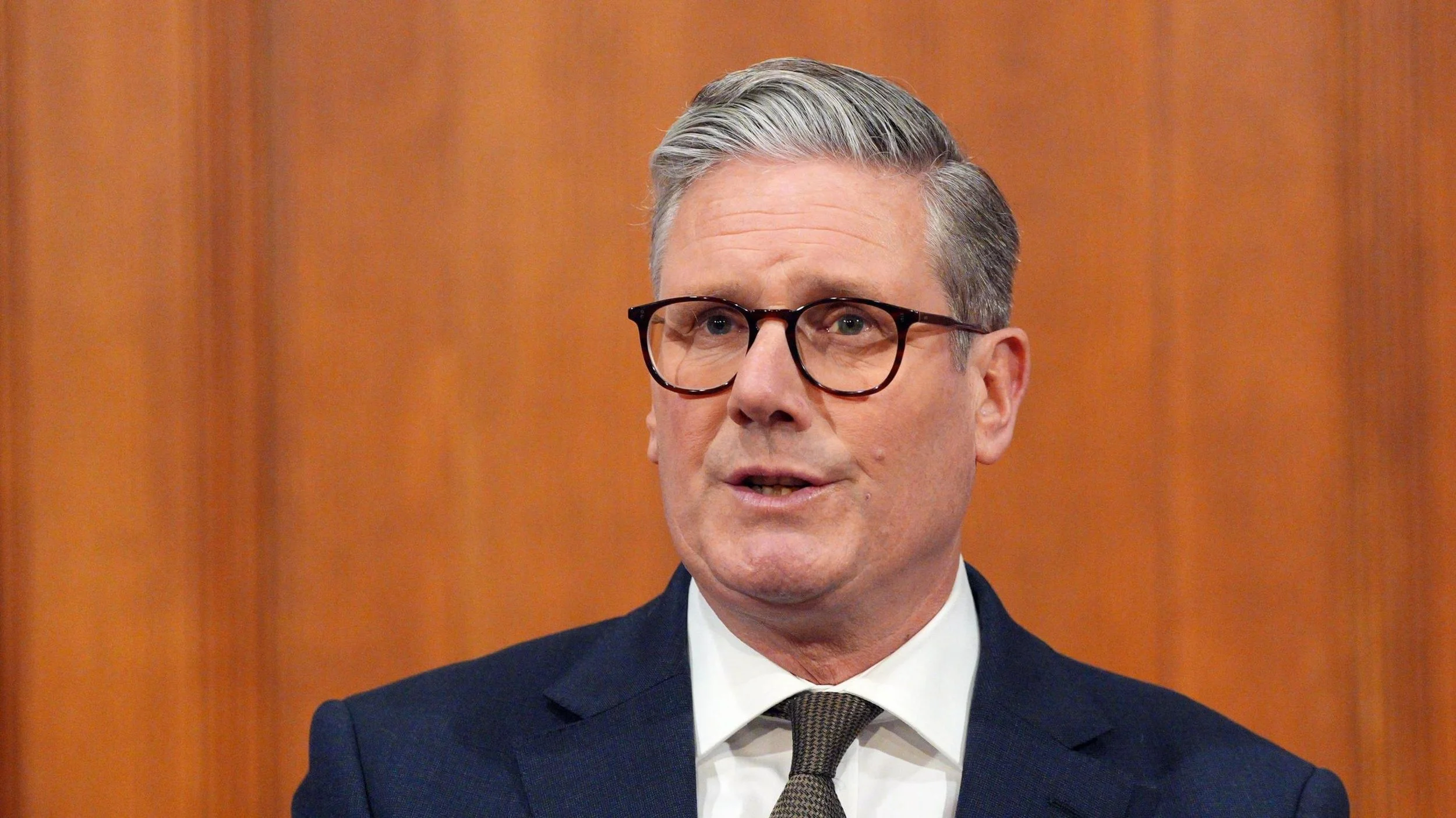
Kier Starmer speaking after winning 2024 election
3. Gaza: Silence, Complicity, or Worse
Labour’s position on Gaza has been indefensible. Even after UN findings claiming Israel’s actions in Gaza amount to genocide, the party has remained largely silent, or worse, complicit.
Starmer previously defended Israel’s “right” to cut off water and power to Gaza, actions considered collective punishment under international law. Arms export licences to Israel still stand in many cases, despite catastrophic humanitarian consequences. His performative recognition of Palestine as a state doesn’t fool anyone free of the Netanyahu tinted glasses.
What a principled government would do: Suspend all arms exports to Israel immediately. Recognise Palestine fully, not when politically convenient. Fund humanitarian aid and stand firm for international law, even when it challenges allies or threatens donor relationships.
4. Authoritarian Discipline & Breaking Promises
Labour has adopted a culture of internal authoritarianism. MPs who voted to scrap the two-child cap had the whip suspended.
The 2024 manifesto promised an “ambitious strategy to reduce child poverty” and end “mass dependence on food banks.” But keeping policies like the two-child cap and real-terms welfare cuts shreds those promises.
What a competent and democratic government would do: Embrace internal debate, allow ethical dissent, and uphold its own manifesto. Policy must be shaped with input from communities, unions, and the people affected, not imposed top-down from Headquarters.
5. Kissing Trump’s Ring & Serving Empire Over People
Labour’s defence and foreign policies increasingly echo the Conservative obsession with aligning tightly to U.S. geopolitical interests, regardless of moral cost.
Raising defence spending to meet NATO targets while cutting international aid mirrors exactly the kind of Trump-era militarism that many hoped Labour would reject.
And yet: homelessness, poverty, mental illness, Labour claims we “can’t afford” to address these properly. But we can afford warships and F-35s? The contradiction is grotesque.
What a responsible government would do: Build a foreign policy rooted in human rights and diplomacy. Fund domestic crises first like housing, health, education. Say no to U.S.-style militarism and yes to independent, compassionate international leadership.
The Alternative Is Not More of the Same
These five failures show Starmer’s government has not so much cleared away Conservative damage as adopted much of its playbook, cutting social supports, deferring reform, pouring money into war and defence, and protecting power from below.
For those disillusioned, there are alternatives: The Green Party, under its new leader Zack Polanski, promises stronger action on climate, housing justice, wealth redistribution, anti‑imperialist foreign policy, and radical welfare reform.
“Your party” under Sultana & Corbyn would (in principle) restore universal welfare, oppose arms exports that violate international law, emphasise mental health and housing as moral priorities, and re‑centre democracy both domestically and internationally.
All this despite the current inner-party conflicts, which yes don't look great optically, but do not define the movements ambition.
If you believe politics must be more than administration, if you believe it should carry moral weight in every decision, then these alternatives matter. Because the real choice isn’t between “Labour vs Conservative” in name; it’s between those who govern for the rich and powerful, and those who govern for the vulnerable and the many.

Starmer’s real motivation
Alfie Robinson